

Made in Burgundy
Where the non-porous glaze begins
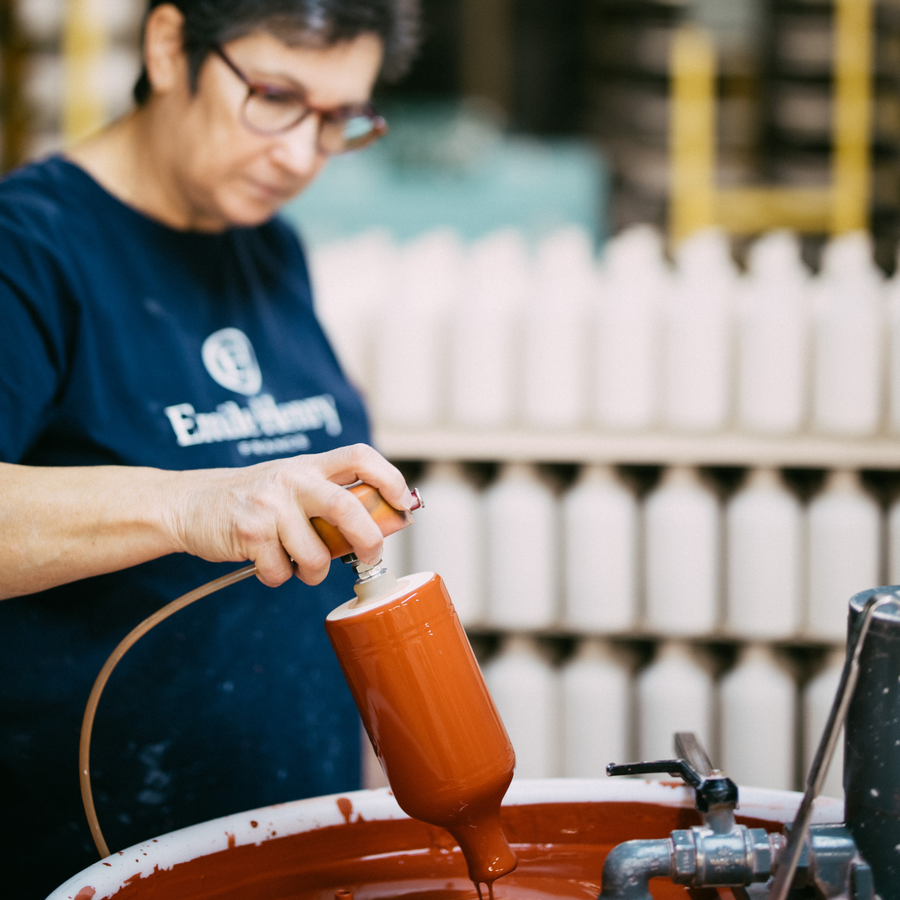
The non-porous finish is not an afterthought — it is created by hand. At our atelier in Burgundy, each piece is glazed individually, coating the ceramic in a smooth glaze that fires to a hard, sealed, glass-like surface.
It is this glaze that gives every Emile Henry dish its defining qualities: nothing is absorbed, flavours never transfer, and the surface resists stains and odours for years of everyday use. Craftsmanship you can taste in every meal.
What does porous and non-porous mean?
It comes down to the surface. A porous surface has tiny openings that soak things up; a non-porous glaze seals the surface so nothing gets in.
Porous surface
An open surface
A porous, unglazed ceramic surface is full of microscopic openings. Moisture, cooking odours and flavours can settle into the clay over time — which is why some dishes hold on to the smell of last night's dinner, and why they can stain and discolour with use.
Emile Henry
A sealed glaze
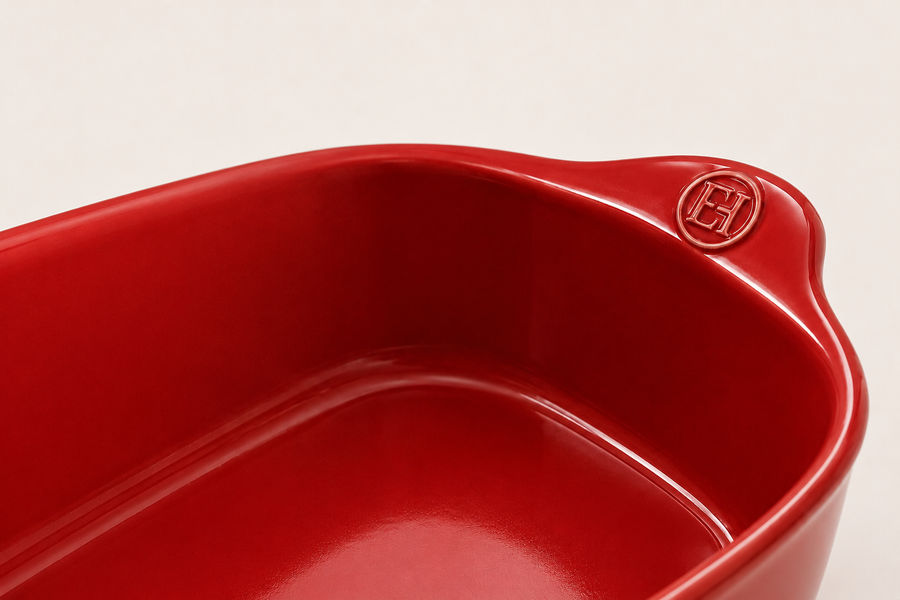
Every Emile Henry piece is finished with a smooth, high-quality glaze that is completely non-porous. Because the glaze seals the surface, nothing is absorbed — no moisture, no odours, no flavours — so food stays pure and the dish stays looking its best, wash after wash.
Common questions about ceramic
Everything you might want to know about porous and non-porous ceramic cookware.
Is Emile Henry ceramic non-porous?
Yes. Every Emile Henry piece is finished with a smooth, high-quality glaze that is completely non-porous. It does not absorb moisture, odours or flavours, so food stays pure and the surface resists staining.
Does ceramic cookware absorb odours and flavours?
Porous ceramic can absorb odours and flavours into the clay over time, which is why some dishes retain lingering smells. A non-porous glaze, like the one on every Emile Henry piece, seals the surface so nothing is absorbed and flavours never transfer between dishes.
What is the difference between porous and non-porous ceramic?
Porous ceramic has a surface full of microscopic openings that can soak up moisture, odours and stains. Non-porous ceramic has a sealed, glazed surface that keeps everything out — so it stays hygienic, resists staining and keeps food tasting as it should.
Is non-porous ceramic more hygienic?
Yes. Because a non-porous glazed surface does not absorb moisture, bacteria, odours or flavours, there is nowhere for residue to settle. It wipes clean and stays hygienic wash after wash.
Will non-porous ceramic stain?
The sealed glaze on Emile Henry ceramic resists staining and discolouration far better than porous ceramic, which can absorb colour into the clay. With normal care, the surface keeps its original finish for years.
Pure performance
The non-porous difference
Each piece is hand-glazed at our atelier in Burgundy, with a smooth, non-porous finish that keeps every meal tasting as it should.
Emile Henry
Non-porous ceramic
Our smooth, high-quality glaze is completely non-porous. It does not absorb moisture, odours or flavours, so every meal tastes as it should, dish after dish.
No lingering smells
Flavours never transfer from one dish to the next.
Stain resistant
The glazed surface resists staining and discolouration.
Hygienic & healthy
Does not absorb bacteria, odours or flavours.
Ordinary ceramics
Why porous ceramic falls short
Ordinary porous ceramic can absorb moisture, odours and flavours into the clay over time — so it may retain lingering smells and is more prone to staining. A non-porous glaze keeps food pure, dish after dish.
Cook. Serve. Store. Beautifully, every day.